Adam Curtis Documentaries
- sule82
- 21 post avaible
It Felt Like a Kiss
It Felt Like a Kiss
The story of America's rise to power starting with 1959, using archival footage and US pop music to highlight the consequences to the rest of the world and in the peoples' minds.
The Century of the Self
The Century of the Self
The legacy of famed psychoanalyst Sigmund Freud informs the lives of people throughout the world even to this day, though it's a phenomenon to which most are unaware. The film is an exhaustive examination of his theories on human desire, and how they're applied to platforms such as advertising, consumerism and politics.
The Power of the Past Miniseries
The Living Dead
The Living Dead: Three Films About the Power of the Past is a series of films that investigate the way that history and memory (both national and individual) have been manipulated and distorted by politicians and others for various means of control.
Series
Part 1 — On the Desperate Edge of Now
Examines how the various national memories of the Second World War were effectively rewritten and manipulated in the Cold War period. For Germany, this began at the Nuremberg Trials, where attempts were made to prevent the Nazis in the dock—principally Hermann Göring—from offering any rational argument for what they had done. Subsequently, however, bringing lower-ranking Nazis to justice was effectively forgotten about in the interests of maintaining West Germany as an ally in the Cold War. For the Allies, faced with a new enemy in the Soviet Union, there was a need to portray World War II as a crusade of pure good against pure evil, even if this meant denying the memories of the Allied soldiers who had actually done the fighting, and knew it to have been far more complex. A number of American veterans related how years later they found themselves plagued with the previously-suppressed memories of the brutal things they had seen and done.
Part 2 — You Have Used Me as a Fish Long Enough
In this episode, the history of brainwashing and mind control is examined, particularly the way in which psychiatry pursued ‘Tabula rasa’ theories of the mind, initially in order to ‘set people free’ from traumatic memories and then later as a potential instrument of social control. The work of Ewen Cameron and the CIA’s mind control programme MKULTRA is surveyed, with particular reference to Cold War theories of communist brainwashing and the search for hypnoprogammed assassins.
Part 3 — The Attic
Finally, the Imperial aspirations of Margaret Thatcher are examined, particularly the way in which Mrs Thatcher used public relations in an attempt to emulate Winston Churchill in harking back to Britain’s “glorious past” to fulfil a political or national end.
All Watched Over by Machines of Loving Grace
All Watched Over by Machines of Loving Grace
We have been colonised by the machines we have built. Although we don't realise it, the way we see everything in the world today is through the eyes of the computers.
PB Miniseries
Pandora's Box
Pandora's Box is a six-part 1992 BBC documentary television series which examines the consequences of political and technocratic rationalism. The episodes deal, in order, with communism in The Soviet Union, systems analysis and game theory during the Cold War, economy in the United Kingdom during the 1970s, the insecticide DDT, Kwame Nkrumah's leadership in Ghana during the 1950s and 1960s and the history of nuclear power.
Bitter Lake
Bitter Lake
Bitter Lake explores how the realpolitik of the West has converged on a mirror image of itself throughout the Middle-East over the past decades, and how the story of this has become so obfuscating and simplified that we, the public, have been left in a bewildered and confused state. The narrative traverses the United States, Britain, Russia and Saudi Arabia—but the country at the centre of reflection is Afghanistan. Because Afghanistan is the place that has confronted political figureheads across the West with the truth of their delusions—that they cannot understand what is going on any longer inside the systems they have built which do not account for the real world. Bitter Lake sets out to reveal the forces that over the past thirty years, rose up and commandeered those political systems into subservience, to which, as we see now, the highly destructive stories told by those in power, are inexorably bound to. The stories are not only half-truths, but they have monumental consequences in the real world.

TraumaZone Miniseries
Russia 1985-1999: TraumaZone
Russia 1985–1999: TraumaZone: What It Felt Like to Live Through The Collapse of Communism and Democracy
---
Since the late 1980s, BBC news crews have filmed all across the Soviet Union and Russia, but only a tiny portion of their footage was ever used for news reports. The rest was left unseen on tapes in Moscow. Filmmaker Adam Curtis obtains these tapes and uses them to chronicle the collapse of the Soviet Union, the rise of capitalist Russia and its oligarchs, and the effects of this on Russian people of all levels of society, leading to the rise to power of Vladimir Putin, and today’s invasions of Ukraine. The films take you from inside the Kremlin, to the frozen mining cities in the Arctic circle, to tiny villages of the vast steppes of Russia, and the strange wars fought in the mountains and forests of the Caucasus.
Shorts: Oh Dearism 2
Shorts: Oh Dear-ism II & Non-Linear War
A look back on the news events from 2014 reveals a confusing, muddled mess. Things are increasingly chaotic, along with the reporting of the events in the culture of 24-7 rolling news, sound-byte feeds and the Internet. The result, as we see, is not a coherent public understanding of these complex events, but more a profound mass-confusion, with discourse destroyed, which in-turn broods disengagement from the world and further atomises an already divided-and-conquered public. It is this response that is a powerful form of social control, and is by design.
Shorts: Oh Dearism
Shorts: The Rise of Oh Dear-ism
Short film about how mainstream media simplify complex events and present them as "scattered terrible things happening everywhere, Oh Dear", leaving the public feeling powerless to do anything about them. Screened in the third episode of the first series of Charlie Brooker's Newswipe.
HyperNormalisation
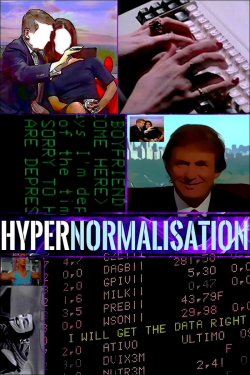
HyperNormalisation
We live in a world where the powerful deceive us. We know they lie. They know we know they lie. They do not care. We say we care, but we do nothing, and nothing ever changes. It is normal. Welcome to the post-truth world. How we got to where we are now…
It Felt Like a Kiss
It Felt Like a Kiss
The story of America's rise to power starting with 1959, using archival footage and US pop music to highlight the consequences to the rest of the world and in the peoples' minds.
Shorts: Paranoia
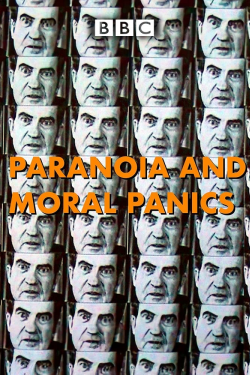
Shorts: Paranoia and Moral Panics
This short film uses the story of Richard Nixon’s paranoia to explore how a similar outlook has been perpetuated on the larger social scale by the new media age. Skimming through the evolution of the mainstream media via television and newspapers, this short film comments on how politics has been paralysed by a media that has taken serious threats and sensationalised them, resulting in political cynicism and disengagement, which in-turn feeds a viscous cycle of nihilism and further sensationalist politics and media.
The Trap Miniseries
The Trap: What Happened to Our Dream of Freedom
If one steps back and looks at what freedom actually means in the West today, it’s a strange and limited kind of freedom. The United States and its empire self-describe fighting the Cold War for “individual freedom,” yet it is still something that the leaders of our so-called democracies continually promise to give us. Abroad, in Iraq and Afghanistan, the attempt to force “freedom” on to other people has led to more than just bloody mayhem, and this, in turn, has helped inspire terrorist attacks in Britain and elsewhere. In response, the government has dismantled long-standing laws that were designed to protect individual freedom and civil liberties.

CnGYOoMH Miniseries
Can't Get You Out of My Head
In six films, Adam Curtis traces the different forces across the world that have led to now. It covers a wide range—including the strange roots of modern conspiracy theories, the history of China, opium and opioids, the history of Artificial Intelligence, melancholy over the loss of empire and, love and power. And explores whether modern culture, despite its radicalism, is really just part of the new system of power.

Re: LAB
Copyright ©
2026 tv.wirac.net.